
Pour a handful of dal into a steel bowl before rinsing it, and you expect every single grain to look pretty much the same. No tiny stones, no shrivelled black seeds, no chipped halves, and definitely no gray dust coating your fingers.
When you cook dinner at home, that clean uniformity feels completely ordinary. You barely think twice about it. Yet anyone who has ever stood inside a rural grain mandi during harvest season knows just how raw farm produce actually looks. Freshly harvested pulses show up mixed with dried pods, twigs, mud clods, pebbles, broken bits, and seeds carrying wildly different levels of moisture.
Turning thousands of tonnes of rough agricultural harvest into spotless, export-grade food takes far more than an old-fashioned flour mill. Inside AgroPure, modern processing lines, optical sensors, and disciplined quality checks work side by side to take raw crops from Indian farms and deliver clean, reliable staples to kitchens around the world.
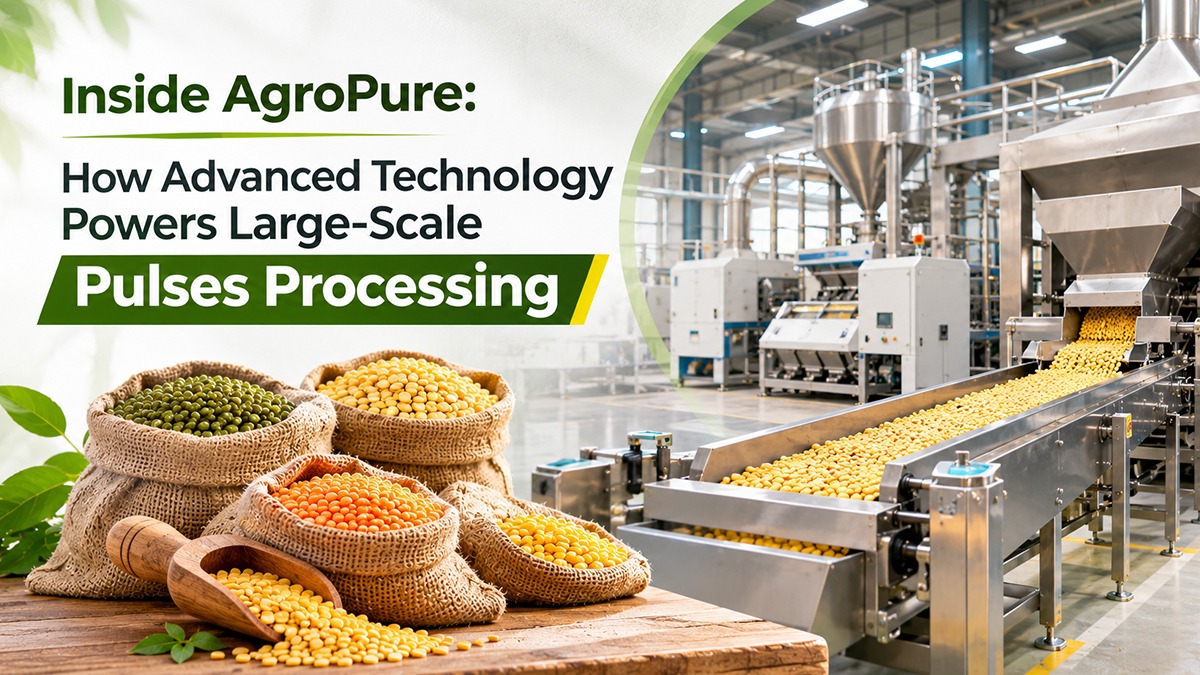
Cleaning and splitting twenty sacks of lentils for a local neighbourhood kirana store is one thing. Processing massive commercial volumes for national retail brands and overseas food distributors is an entirely different ballgame. At AgroPure, our automated facilities process up to 1,250 MT of pulses and besan every single day, turning raw farm harvests into clean, uniform food at an industrial scale.
When you run a plant at that capacity, one small slip in moisture control or sorting does not just spoil a single bag, it can ruin an entire shipping container…
Global food buyers inspect grain uniformity, cooking behaviour, and strict hygiene records before they ever approve a shipment. Meanwhile, a parent buying a one-kilo packet off a supermarket shelf simply expects the dal to cook soft and even in the pressure cooker, without spending twenty minutes picking out stones on a plate beforehand.
Keeping both buyers happy means taking guesswork out of the equation and letting calibrated machinery handle the heavy work at every stage.
Step onto the floor of an automated pulses facility, and the first thing you notice is what is missing: nobody is scooping grain by hand or leaving open sacks sitting on dusty floors. From the moment farm trucks tip their loads into the intake pits to the second sealed bags drop off the packing line, closed-loop equipment keeps the food moving cleanly.
Clearing Out Field Debris and Stones Before a single bean gets split or dehusked, raw pulses travel through heavy-duty air classifiers and vibrating screens. Strong air currents lift away light chaff, dried leaves, and field dust. Right after that, gravity separators and precision destoners weed out heavy impostors, tiny pebbles, hard mud balls, and stray metal specks, that match the exact size and shape of a lentil. Catching those early protects the milling rollers down the line and keeps foreign objects far away from the final pack.
Getting the Moisture Balance Right One of the trickiest jobs in any dal mill is loosening the tough outer husk without smashing the soft kernel inside. If the pulse is too dry, the rollers shatter it into powder, wasting good food. If it holds too much dampness, the skin sticks stubbornly to the seed.
Modern conditioning units solve this by measuring grain moisture and gently tempering the batch before milling starts. That controlled conditioning relaxes the grip between the outer skin and the inner split, letting rollers peel and split the pulse into clean, smooth halves while keeping its natural nutrition intact.
High-Speed Optical Color Sorting Even after mechanical sieves do their job, a few weather-stained, spotted, or insect-bitten grains always try to sneak through. Years ago, rows of workers had to sit beside moving conveyor belts picking out bad grains by eye, slow, tiring work where mistakes easily happened.
Today, optical color sorters do that job faster than the human eye can blink. Built with high-definition cameras and smart sensors, these machines inspect thousands of falling grains every single second, spotting tiny shade shifts you would never notice on your own. The instant a faulty grain drops past the lens, a tiny, targeted puff of compressed air flicks it into a reject chute without touching the good lentils falling right beside it.
Size Grading and Touch-Free Packing Once sorted, the clean pulses pass through rotary graders so every grain in a batch matches in size, which is why good dal cooks evenly instead of turning half-mushy and half-raw. From there, automated weighers and form-fill-seal machines pack the lentils without human contact, sealing out humid air and warehouse dust before dispatch.
Good machinery makes consistency possible, but technology alone never builds a reputation. Real reliability comes down to the standards people enforce on the factory floor every day.
At AgroPure, our quality control teams test incoming harvests before they even enter storage silos, checking moisture readings, foreign matter percentages, and grain density. While the lines are running, technicians pull regular samples for lab checks to make sure every lot meets strict domestic and international food safety rules.
That same disciplined mindset runs across everything we supply. Whether we are handling bulk pulses and besan export orders for overseas distributors, delivering clean grains to large foodservice kitchens, or expanding our everyday pantry lineup with pasta and vermicelli, our work stays anchored in purity, transparency, and dependable supply. By keeping tight control over sourcing, processing, and dispatch, we make sure partners get the exact quality they were promised, shipment after shipment.
The world is eating more plant-based protein than ever before, and Indian pulses sit right at the heart of that shift. Still, winning trust in competitive domestic and global markets takes more than good harvests, it takes clean, modern infrastructure that protects the crop from farm to kitchen.
By pairing smart processing technology with strict quality systems and honest partnerships, AgroPure continues to raise expectations for Indian agri-food supply, turning simple everyday staples into products businesses count on and families trust at every meal.
Delivering purity, nutrition and trust
to millions of families and markets
around the world.
© 2026 GPA Capital Foods Private Limited. All Rights Reserved.
Quick Links
Contact Us