
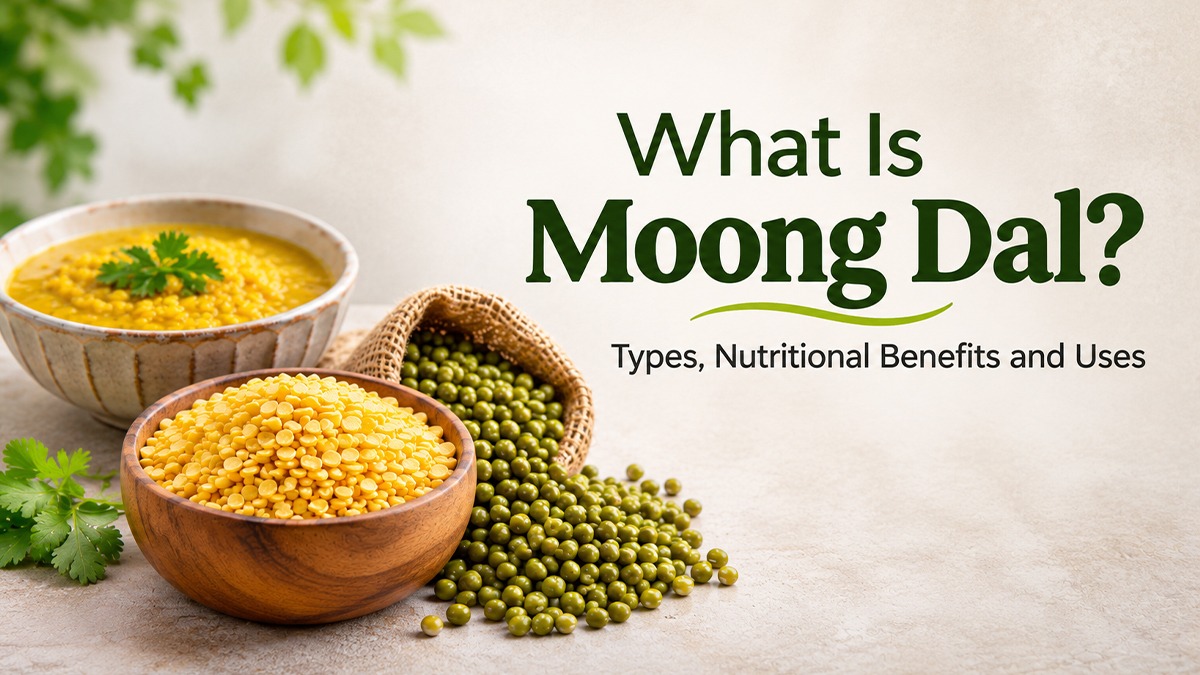
Walk into almost any Indian kitchen and open the pantry. Nine times out of ten, you will spot a jar of small yellow lentils sitting right next to the rice and wheat flour. We reach for it when someone in the house has an upset stomach, when we want a quick weekday dinner that does not sit heavy on the chest, or when we just crave a warm bowl of comfort food on a rainy evening.
Yet, despite eating it two or three times a week, plenty of people still pause and ask: What Is Moong Dal? Is it just one kind of yellow lentil, or are those whole green beans in the supermarket aisle the exact same thing?
Whether you cook for your family every day or source bulk ingredients for a commercial food brand, knowing how this humble pulse works makes a real difference in the kitchen. Here is a clear, down-to-earth look at what moong dal actually is, the different forms it takes, why nutritionists swear by it, and how kitchens around the world put it to work.
At its core, moong dal comes from the mung bean (Vigna radiata), a small, oval legume grown across India and much of Asia for thousands of years. In English, people usually call it split green gram or split yellow mung beans.
The confusion often starts because the word dal means two different things in Indian cooking. It refers to the raw split pulse sitting in your jar, and it also refers to the cooked, spiced lentil stew you ladle over hot rice or scoop up with a roti.
When you buy raw moong dal, you are picking up a pulse that hits a rare sweet spot among legumes. Unlike heavier beans such as rajma or chickpeas that demand overnight soaking and long whistles in the pressure cooker, moong dal softens fast. It carries a mild, slightly earthy sweetness instead of a loud, overpowering taste, which lets it soak up whatever spices, herbs, or broths you throw into the pot.
If you walk down the pulses aisle at a local grocer or flip through an international export catalogue, you will generally run into three distinct varieties. Every single one starts from the exact same plant, but the way mills clean, split, and dehusk the bean changes how it looks, tastes, and behaves on the stove.
Sabut Moong (Whole Green Gram) These are the small, round beans kept completely whole with their green outer skin intact. Because the husk stays on, sabut moong holds its shape well and has a firm, slightly chewy bite with a deep, earthy flavour. Cooks love soaking and sprouting whole green moong for crunchy raw salads, or simmering it into hearty, Punjabi-style whole moong curries and spiced dry stir-fries.
Chilka Moong (Split Green Moong) Chilka moong sits right in the middle. The whole green bean is cracked cleanly in half, showing a pale yellow interior while keeping its dark green skin attached. That thin skin gives the dal extra dietary fibre, a nutty aroma, and just enough texture so it does not turn completely mushy. It shines in rustic everyday dals finished with a sizzling garlic and cumin tadka, thick winter soups, and savoury lentil pancakes.
Dhuli Moong (Split Yellow Moong) This is the bright yellow lentil most people picture first when they hear the words moong dal. Millers remove the green outer husk completely and split the inner bean into flat, sunny-yellow halves. Without the skin, dhuli moong cooks in roughly fifteen minutes and melts into a smooth, creamy texture with a gentle, sweet flavour. It is the undisputed go-to for light khichdi, soothing recovery meals, and rich festive sweets like moong dal halwa.
Choosing between the three really comes down to the texture you want in your bowl. If you want a velvety, melt-in-your-mouth dal that cooks before the rice is even done, go with dhuli moong. If you prefer a little more bite and extra fibre without waiting hours for beans to soak, chilka moong does the job effortlessly.
There is a good reason doctors, fitness coaches, and Indian grandmothers all agree on moong dal. Very few pantry staples pack this much real nutrition without making you feel sluggish afterward.
Because moong dal has such a clean, adaptable flavour, home cooks and food brands rarely treat it as a one-dish ingredient.
In Indian households, split yellow moong is the backbone of classic khichdi, simmered slowly with rice, turmeric, and crushed ginger until soft. Across North and West India, soaked and ground moong dal turns into the batter for crisp, golden crepes known as moong dal cheela or pesarattu, often folded over spiced paneer or finely chopped onions and green chillies.
When snack cravings hit, crisp fried salted moong dal remains one of India’s favourite tea-time crunch snacks, while finely milled moong flour goes into roasted laddoos and traditional festive sweets. Outside South Asia, modern food innovators increasingly use dehusked yellow moong to craft plant-based egg substitutes, high-protein pasta blends, and dairy-free spreads, simply because its mild colour and smooth paste mimic richer textures without heavy additives.
Anyone who cooks regularly knows that two bags of dal can behave completely differently in the exact same pot. Old, poorly stored stock takes twice as long to soften, uneven milling leaves half the lentils mushy while the rest stay chalky, and careless handling lets dust or moisture ruin the batch.
For families, retail shelves, and international food buyers alike, great results start long before the stove turns on. At AgroPure, we handle everyday staples with the same precision expected in global food manufacturing. As a trusted Indian agri-food company, we oversee every link in the chain—from direct, responsible farm sourcing and modern hygienic cleaning to accurate splitting, moisture-safe packaging, and punctual dispatch.
Whether we are managing bulk pulses and besan export shipments for overseas distributors, supplying clean grains to large commercial kitchens, or curating dependable pantry staples alongside our pasta and vermicelli lineup, every lot goes through strict quality checks for purity and uniform size. Our focus stays clear: when a customer opens a pack of AgroPure produce anywhere in the world, it should cook evenly, smell fresh, and uphold uncompromising standards of hygiene.
Split varieties (dhuli and chilka) do not need soaking and cook in 15–20 minutes, though a quick 20-minute soak helps them cook even faster. Whole green sabut moong, however, should be soaked for 4–6 hours so it softens evenly.
Whole green (sabut) and split green (chilka) moong offer slightly more fibre and antioxidants because they keep their outer husk. Yellow (dhuli) moong is dehusked, making it lighter and much easier to digest.
Keep it in a clean, airtight container in a cool, dry cupboard away from heat and moisture. Properly dried and packed dal, like the hygienically processed batches from AgroPure stays fresh for up to a year.
Delivering purity, nutrition and trust
to millions of families and markets
around the world.
© 2026 GPA Capital Foods Private Limited. All Rights Reserved.
Quick Links
Contact Us